




Healthcare access control at one of LA County’s busiest hospitals
See how MLK Hospital implemented frictionless access control with facial authentication. Enhanced healthcare security for staff verification and facilities.
2,000+
Employees across the hospital
70+
Security staff enrolled in the first rollout
100%
Effective — no issues reported
12
Additional Rocks planned for high-security areas
The challenge
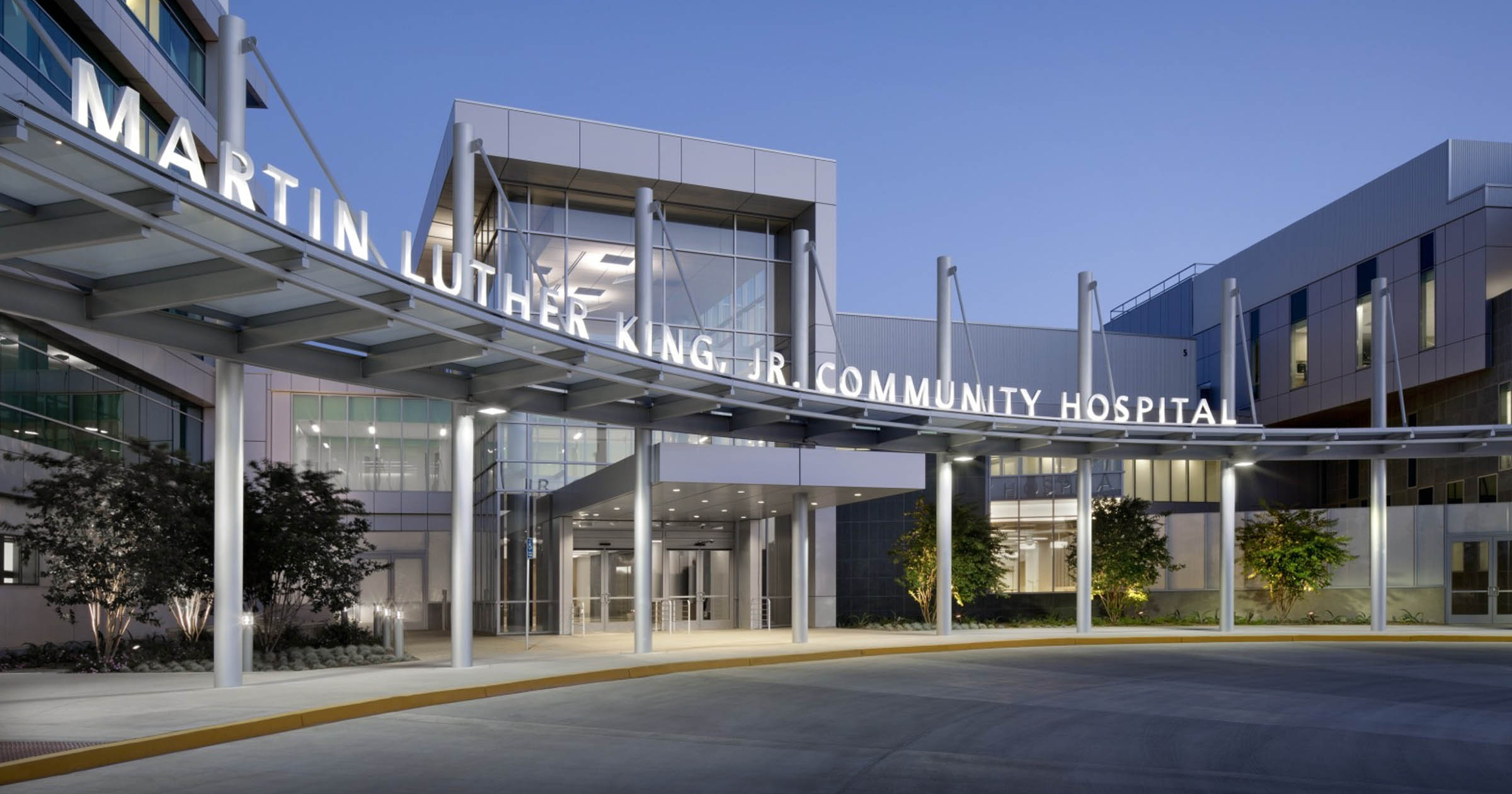
Located in Los Angeles, Martin Luther King, Jr. Community Hospital—MLKCH—has one of the busiest emergency departments in Los Angeles County. It opened in 2015 and is one of only three hospitals in Los Angeles to receive a Health Care’s Most Wired award which is a renowned recognition of a hospital’s optimal use of information technology. They were also honored with an OSPA—Outstanding Security Performance Award—from ASIS International. MLKCH’s commitment to IT and security is strong.
MLKCH leadership sought biometrics to supplement their existing access control solution provided by AMAG Technology Symmetry Access Control. Mark Reed, MLKCH Director of Support Services, said he and his team were considering incorporating biometric card readers to provide additional security and verification. In researching biometric solutions, they came across the Alcatraz Rock 3D Facial Authentication Platform for access control.
MLKCH leadership first wanted to use the Alcatraz Rock to provide frictionless access for employees to the hospital’s security center. The hospital has over 2,000 employees with more than 70 dedicated to the security department. It is these 70 employees that were initially enrolled into the biometric access control program at MLKCH.
“The security department was a natural place to start with coverage from the Alcatraz Rock and facial recognition access control. Our security department obviously has a huge role in maintaining a safe and secure hospital environment for patients, staff, and guests and therefore houses important employees and information. Controlling access to this security area is key and we wanted to ensure that only those individuals that are supposed to be coming and going are the ones that are actually coming and going. What better way is there to verify identity than with facial recognition?”
— Mark Reed, Director of Support Services
The solution
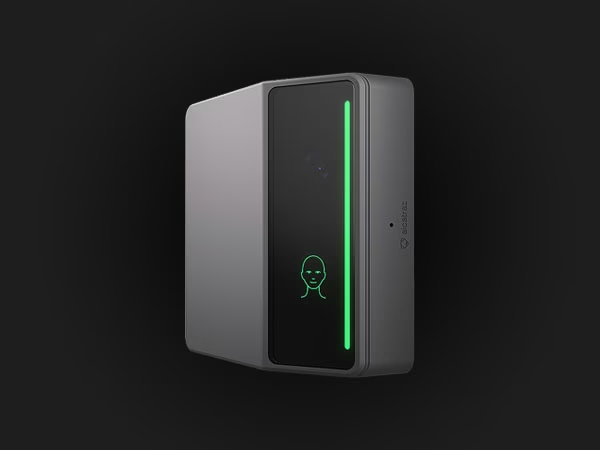
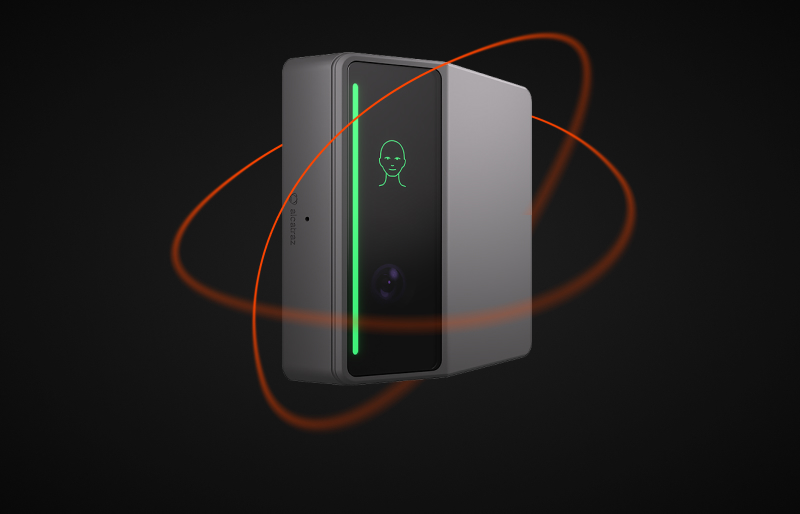
The Alcatraz Rock is a 3D facial authentication product that creates a frictionless and secure environment at enterprises that care about their physical security. Developed by former Apple engineers involved in the FaceID project, the Alcatraz Rock uses facial authentication to replace or augment badges (single and dual-factor) while sensing for tailgating—solving one of the biggest problems in the industry.
The Rock uses artificial intelligence to self-enroll employees, as well as passively detect people who didn’t authenticate to identify tailgating. The Alcatraz Rock integrates into any existing access control infrastructure, badge reader, and badge type—making it the easiest biometric product to deploy while providing security that currently is achieved with costlier turnstiles or guards. It’s integration with AMAG Technology’s Symmetry Access Control platform at MLKCH has provided a seamless transition from using badges to employee faces as credentials.
The MLKCH team has been exceptionally happy with the Alcatraz Rock’s performance and results, said Reed. Transitioning employees to the Alcatraz Rock has been seamless primarily due to the easy enrollment feature, he said.
“You can either enroll someone’s face or you can set it up to automatically learn an employee’s face as they use their badge. We expected it might take a while to learn each employee’s face and to transition to facial recognition only, but by the second day it learned who I was. As I was walking up to the door, the Alcatraz Rock reader detected my face, recognized me, and permitted me to pass through without using my badge.”
— Mark Reed
The results
“We even tried to fool it with fake pictures and other ways, and it passed every test we put it through with flying colors!”
Reed said they originally planned to use the Rock as a two-factor authentication where employees use their badge and face to gain access, but the solution has proven so reliable and the technology is so good, that they only use facial ID, single factor for true frictionless access.
“It’s been 100 percent effective—there have been no issues whatsoever,” he said.
What’s next?
Reed said MLKCH looks to add a dozen more Alcatraz Rocks in the first half of 2020 to expand coverage to the hospital’s high security and critical access areas. This will include IT spaces and data centers that contain ultra-sensitive patient data which can enrich adherence to HIPAA (Health Insurance Portability and Accountability Act of 1996) guidelines.
“We have won several technology awards due to our emphasis in marketing ourselves as a hospital of the future,” said Reed. “By incorporating facial recognition and frictionless biometric access control with the Alcatraz Rock, it’s an example of our continuous commitment to security, technology, and to being one of the most technologically-advanced hospitals in Los Angeles and California.”
Industry
Use cases
Product
By incorporating facial recognition and frictionless biometric access control with the Alcatraz Rock, it’s an example of our continuous commitment to security, technology, and to being one of the most technologically-advanced hospitals in Los Angeles and California.
Mark Reed
Director of Support Services, MLK Community Hospital
More case studies
All case studies