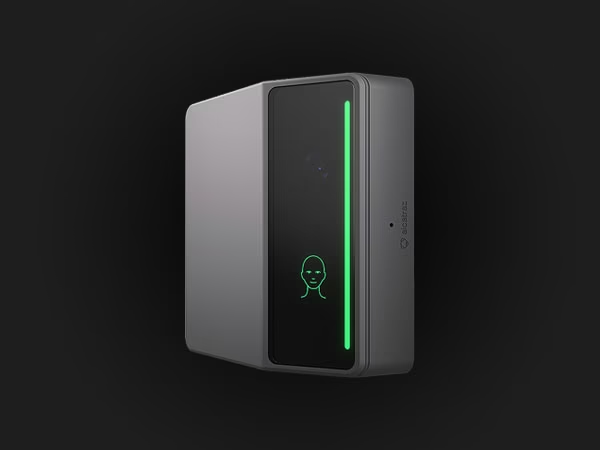





Multi-Factor Authentication, Verified by a Face
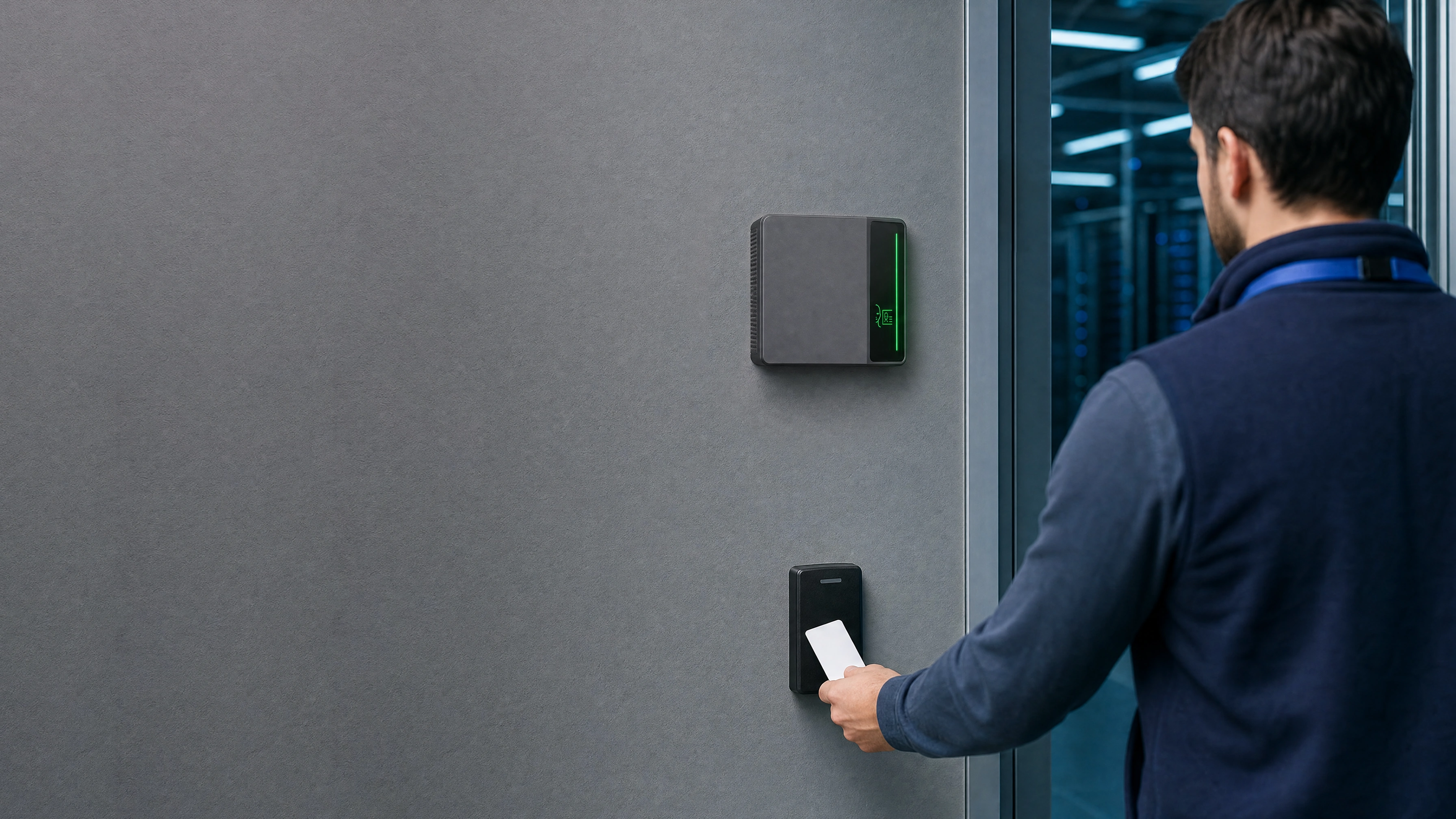
Alcatraz layers facial authentication onto the credentials you already use, a badge, a PIN, or a fingerprint, so entry requires more than one proof. Run two factors at most doors, or add a third at the ones that need it most.
Some doors need more than one credential
A single credential is sufficient for some doors, but not for your highest-security ones. A badge can be borrowed, a PIN read over someone's shoulder, or a fingerprint spoofed, and the log still shows a clean, authorized entry either way. Alcatraz closes that gap.
Pair face with whatever credential you already run, a badge, a PIN, or a fingerprint, or stack a third factor where it's needed most.
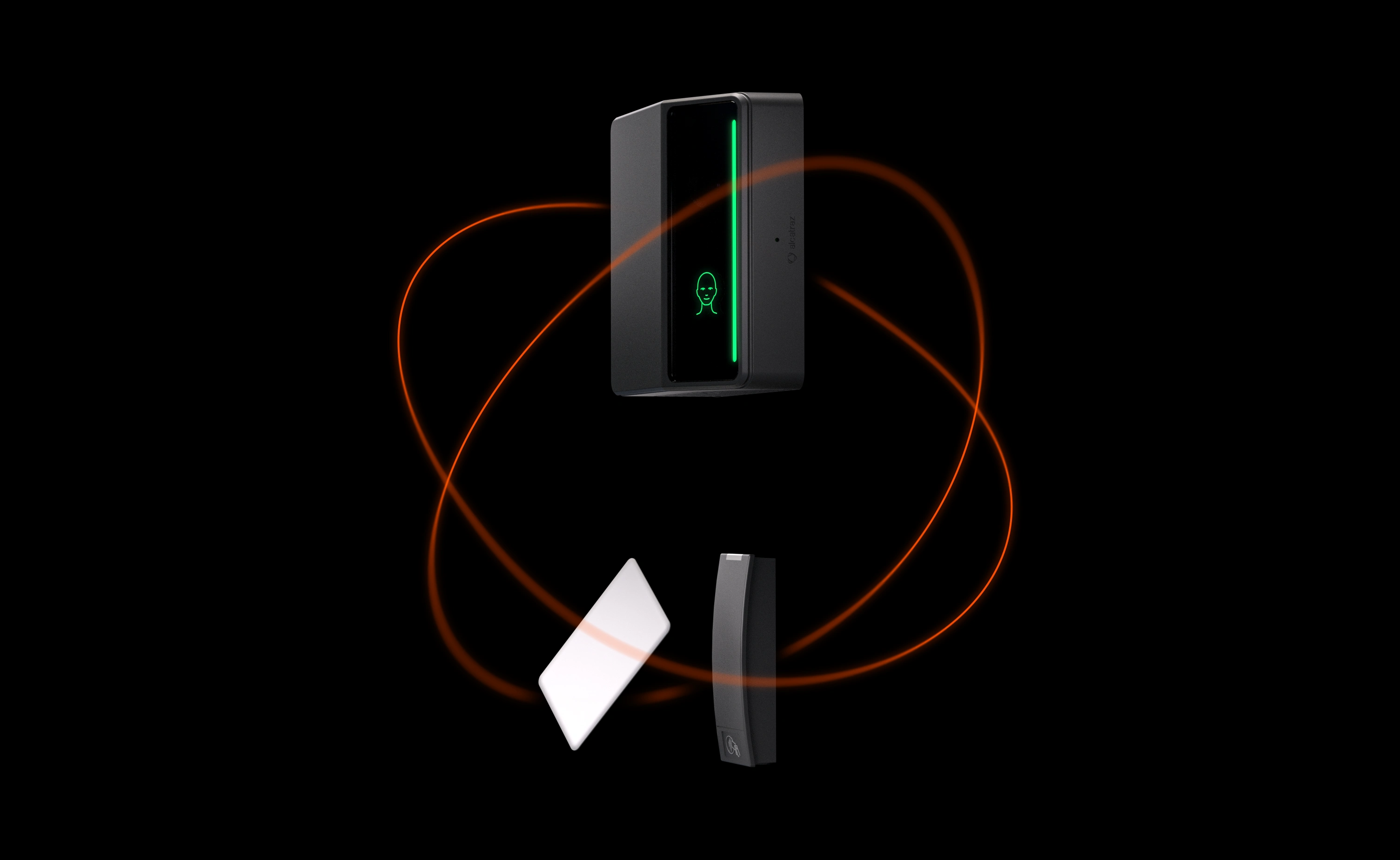
How multi-factor authentication works with facial authentication
For 2FA, a person presents their face and their second credential, a badge, a PIN, or a fingerprint. A three-factor door checks two credentials alongside the face, instead of one.
Alcatraz verifies the face in under a second, no matter which other credentials are required. The ACS releases the door only when every required factor matches. That's the entire transaction.
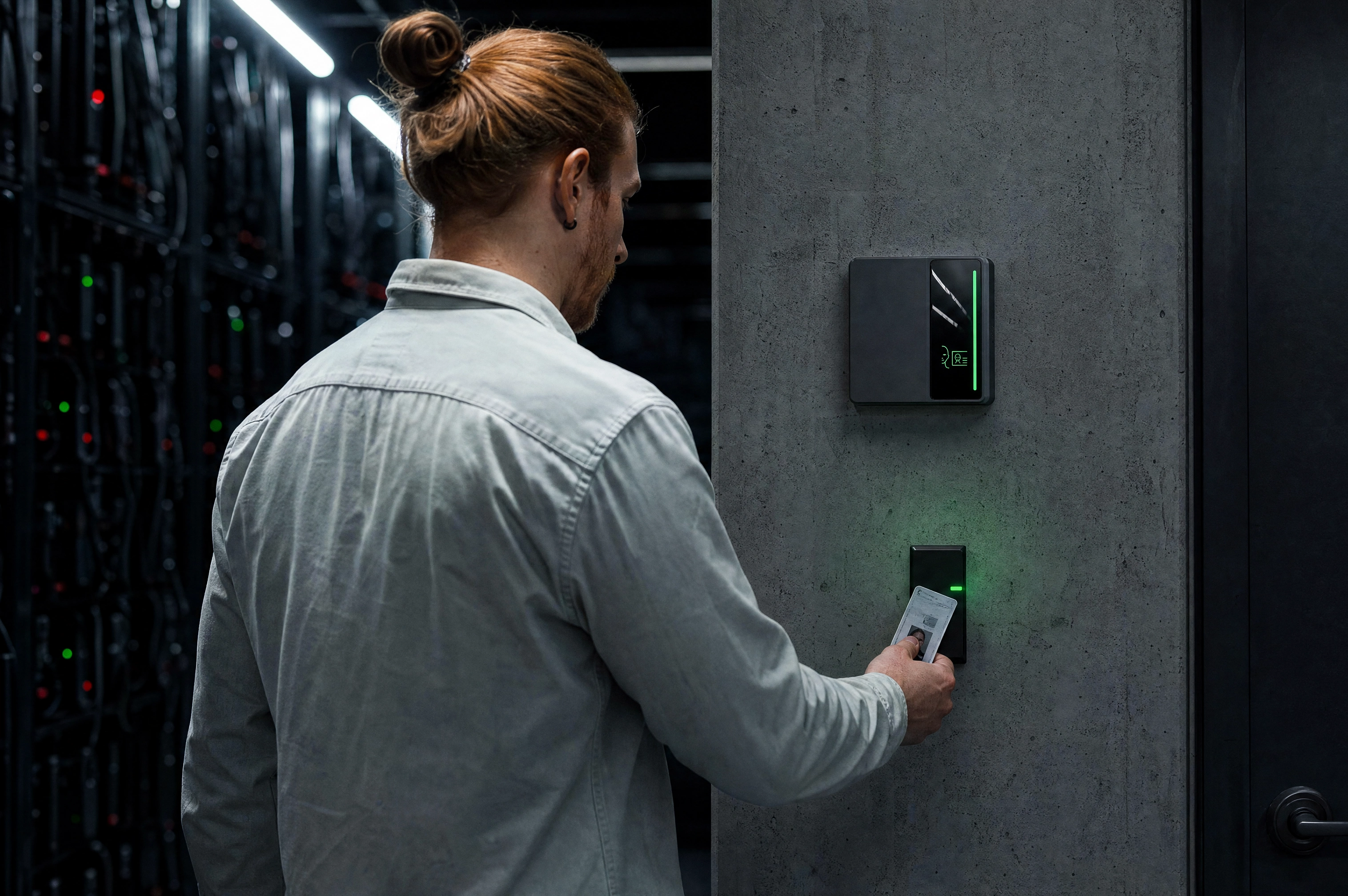
Why security teams choose Alcatraz for multi-factor authentication
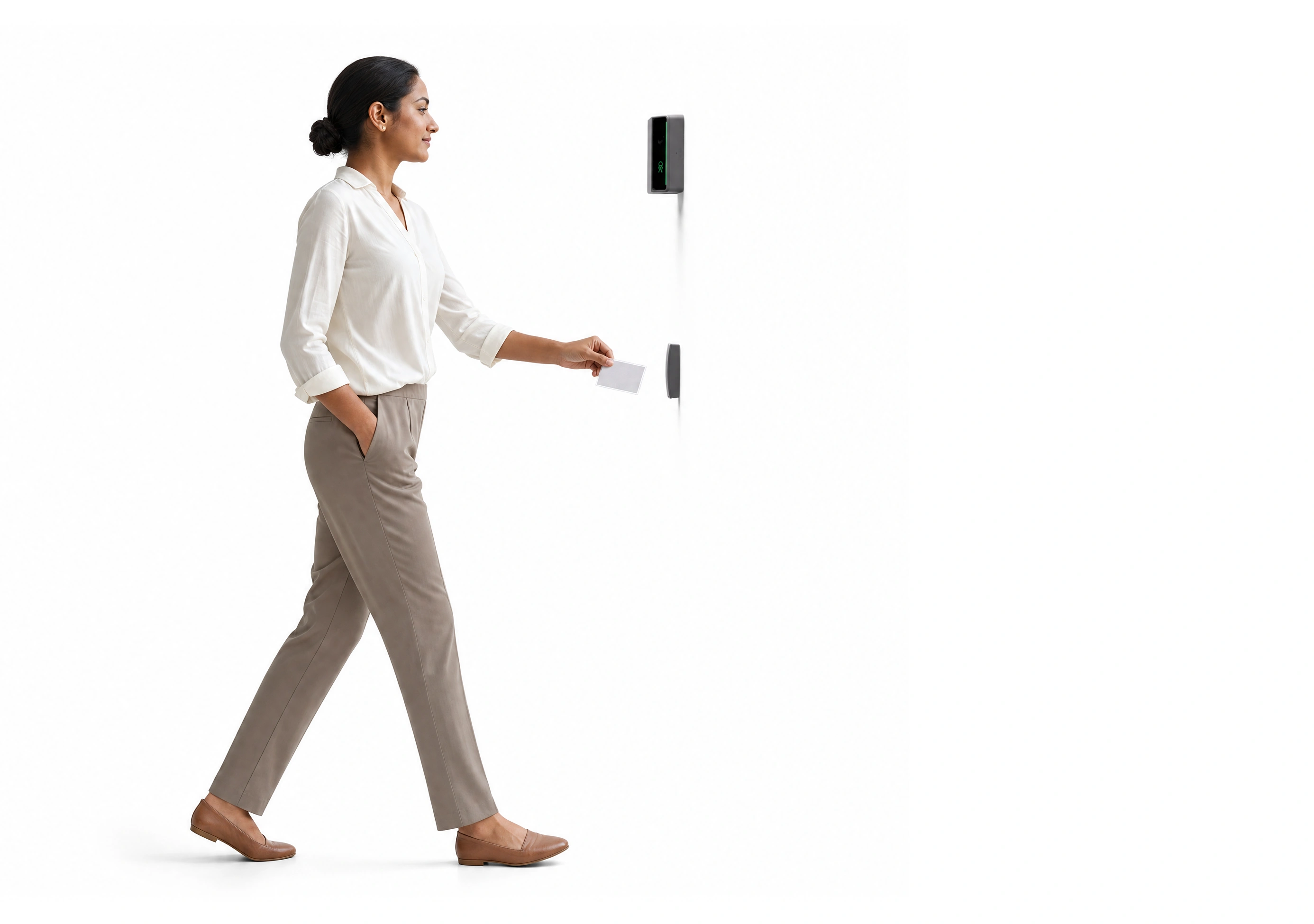
Compliance a single credential can't satisfy
Certain regulations, audits, and corporate security standards require more than one authentication factor at the door, a requirement a single credential, a badge, a PIN, or a fingerprint, can't satisfy alone. Alcatraz adds a verified face as that additional factor, or a third where the standard calls for it. There's nothing new to print, distribute, or manage, and your existing access control system doesn't change.
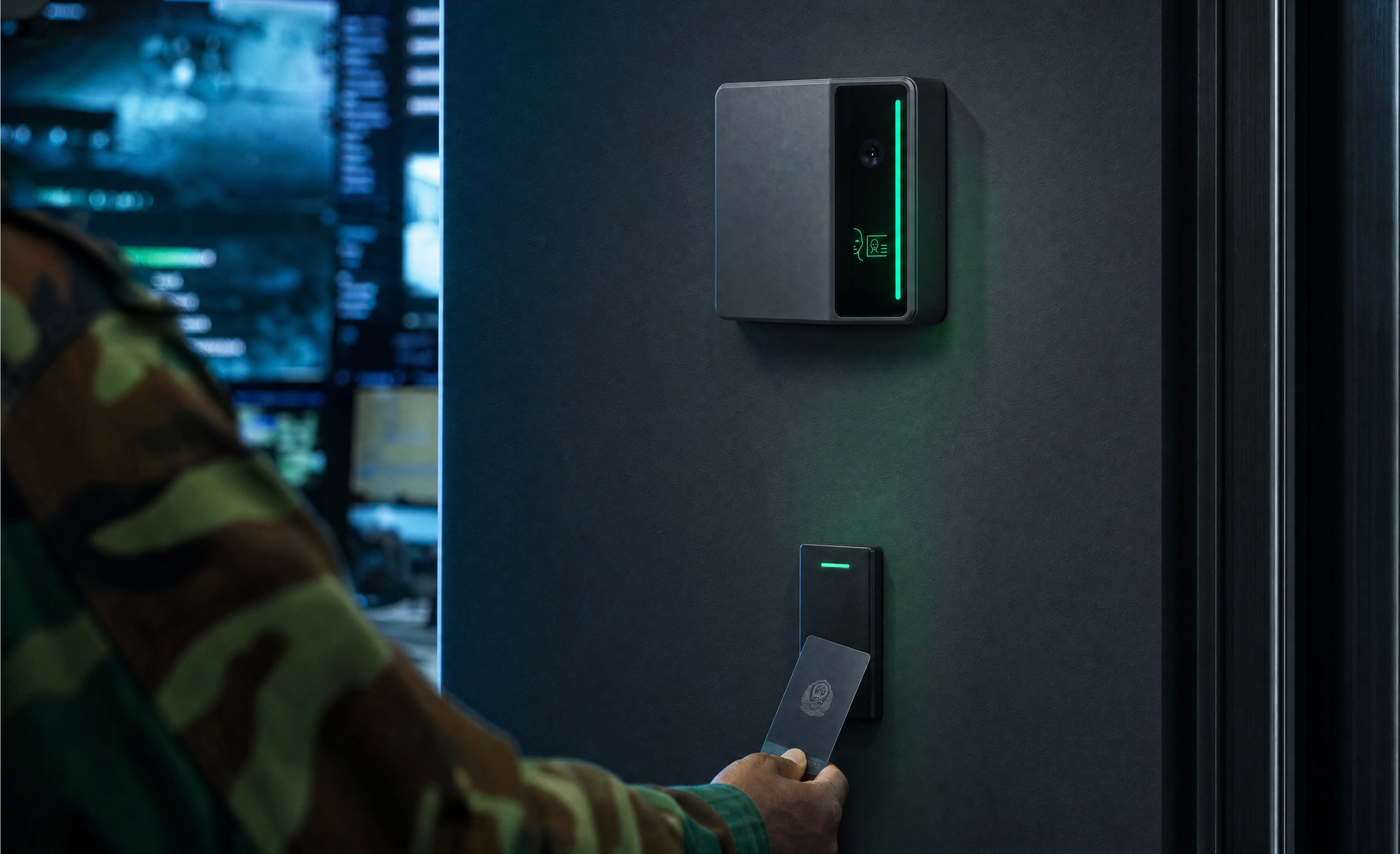
Zero trust, extended to the door
Physical entry finally matches the zero-trust standard applied to every system behind the door. Possession alone opens nothing. Alcatraz verifies that whoever is using a badge, PIN, or fingerprint is the person it belongs to. That eliminates borrowed, cloned, shared, and stolen credentials as a viable point of entry.
Frictionless, and finally reliable
Fingerprint and iris readers make every person stop, position a finger or eye, and wait, turning busy entrances into bottlenecks. When they fail to recognize legitimate users, retries and backup PINs slow the line even more. Alcatraz authenticates a face in under a second, replacing failing legacy biometrics with a second factor that's both faster and more reliable.
Proof from the field
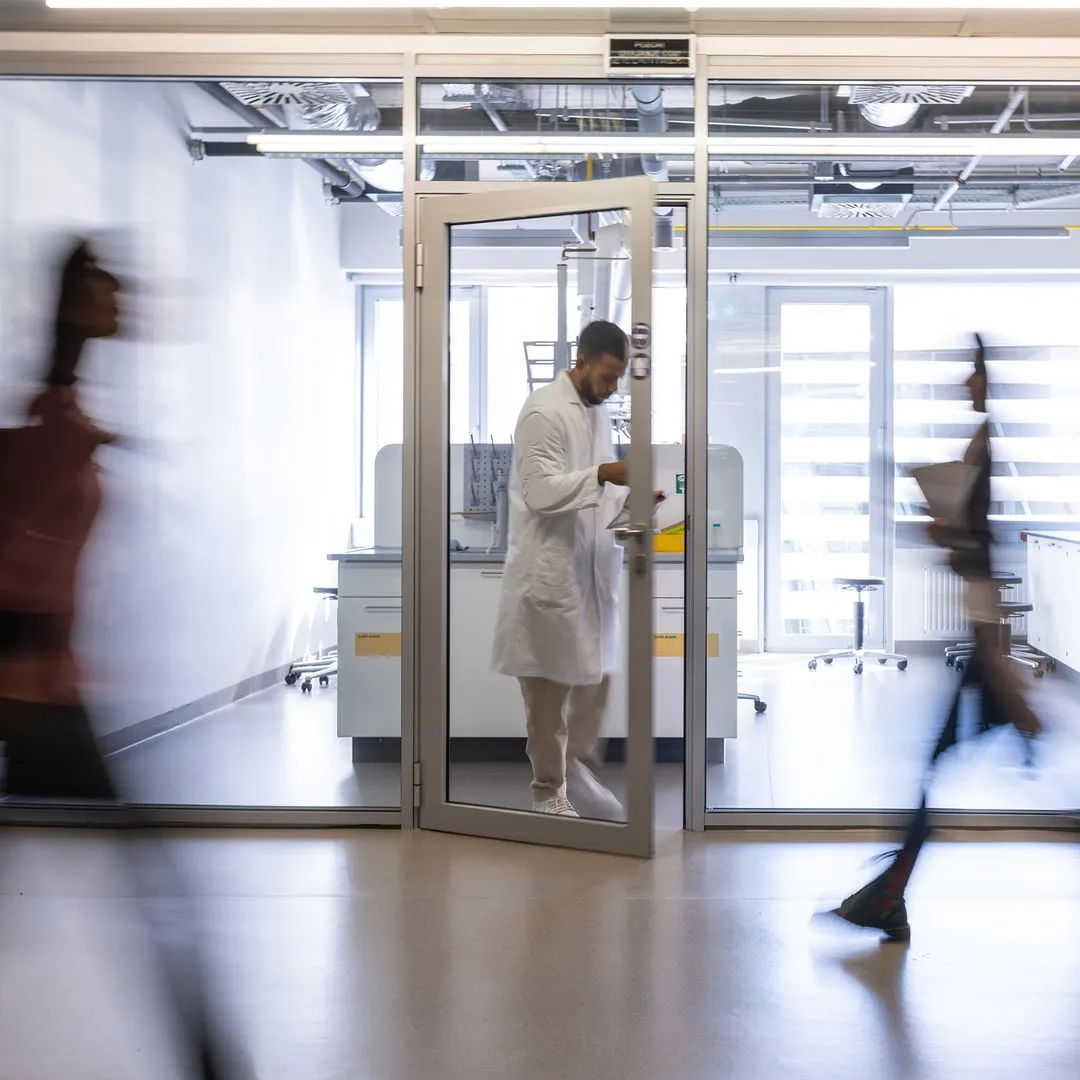

MLK Community Hospital hardens verification without slowing staff down
MLK Community Hospital needed stronger, tailgating-resistant verification at its security center and other high-security spaces like IT and data rooms. Badge-plus-face authentication, layered onto its existing AMAG Symmetry system, closed the gap without adding friction for staff.
Scott Data replaces aging fingerprint readers
Aging fingerprint readers were becoming an operational drag on data center access. Alcatraz replaced them with facial authentication that delivers multi-factor security at single-factor speed.
FAQs
What is multi-factor authentication for physical access control?
What happens if one of the factors doesn't match?
Can Alcatraz’s facial authentication be spoofed with a photo or a mask?
No. Alcatraz's liveness detection checks for real facial depth, not just a flat image, so a printed photo, a screen replay, or a mask can't pass as the face factor. Combined with whatever else the door requires, a badge, a PIN, or a fingerprint, a completed entry proves both the credentials on file and a physically present person.
Which doors should get multi-factor authentication first?
Start with the doors where a single credential is the weakest link: data halls, vaults and wire rooms, classified and compartmented spaces, pharmacy vaults, executive floors, and data rooms. Most compliance frameworks require strong physical access control at these points without mandating a specific method, which is exactly why security teams choose to satisfy that bar with face plus whatever credential they already run, sometimes stacking a third for the doors that need it most.